
Slow down on signing day
A good will still needs to be signed correctly.
The steps are manageable, but a rushed signing can create serious problems later.
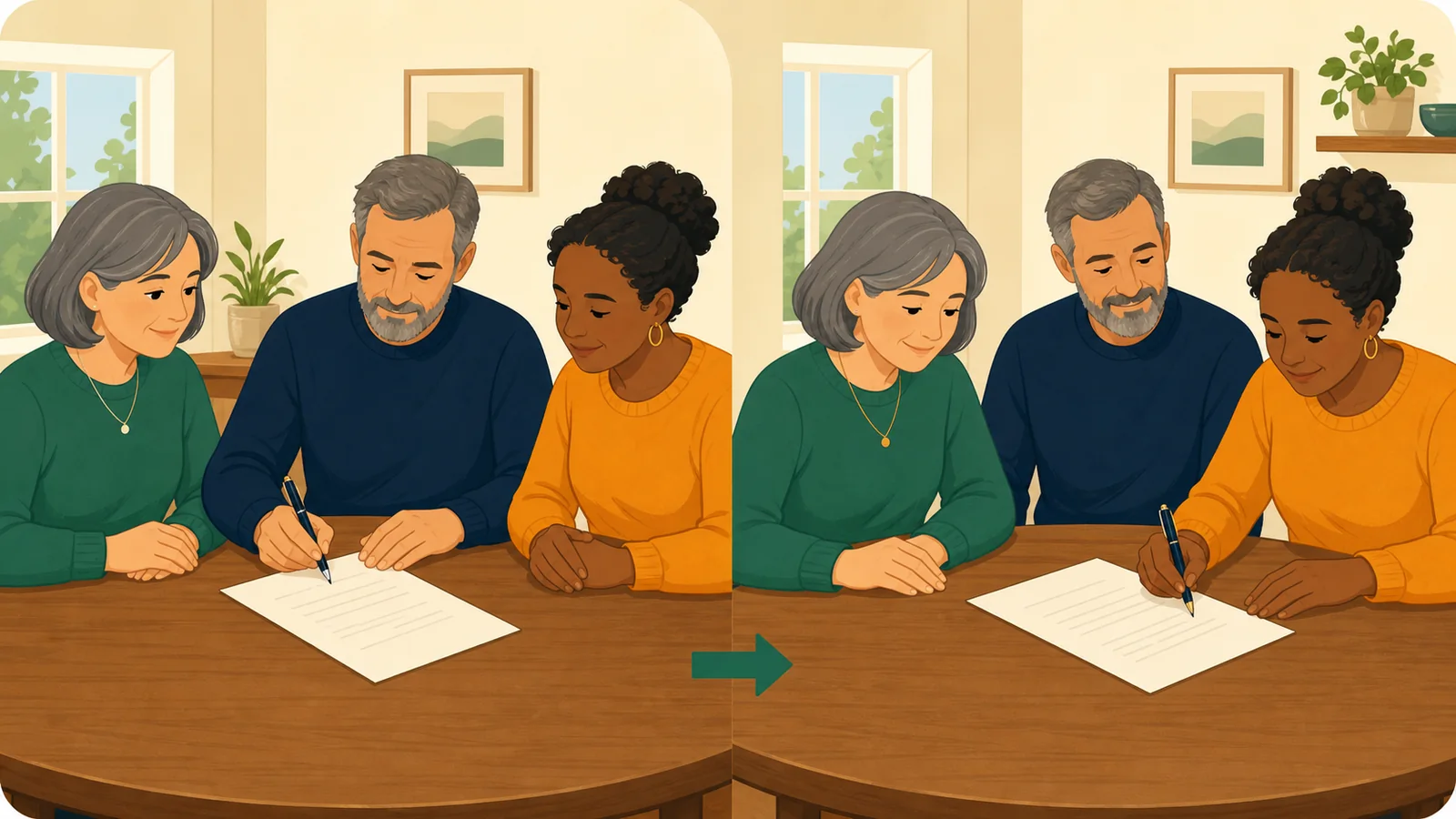
Use two witnessesBoth must be over 18 and see you sign.
Use the same documentYou and the witnesses sign the final will.
Avoid beneficiary witnessesDo not use someone receiving a gift or their married partner.
What commonly goes wrong?
- Only one witness is present
- A beneficiary acts as witness
- A witness cannot see the signing
- People sign different copies
- A date or signature is missing
- Someone changes the will by hand later
- The original signed will is lost
How can you make signing day easier?
Choose a calm time, print the final document and have both witnesses present. Read the provider's instructions before the first signature.
Where should you keep the original?
Tell your executors where it is. A scan can be useful for reference, but the original signed document is important.
Free checklist
Want every signing step in one place?
Use our one-page visual checklist before anyone signs.