
Signing matters
What makes a will legally valid in England and Wales?
You must meet the basic legal requirements and use the correct signing and witnessing process. Following the steps in order helps everyone see what they need to do.
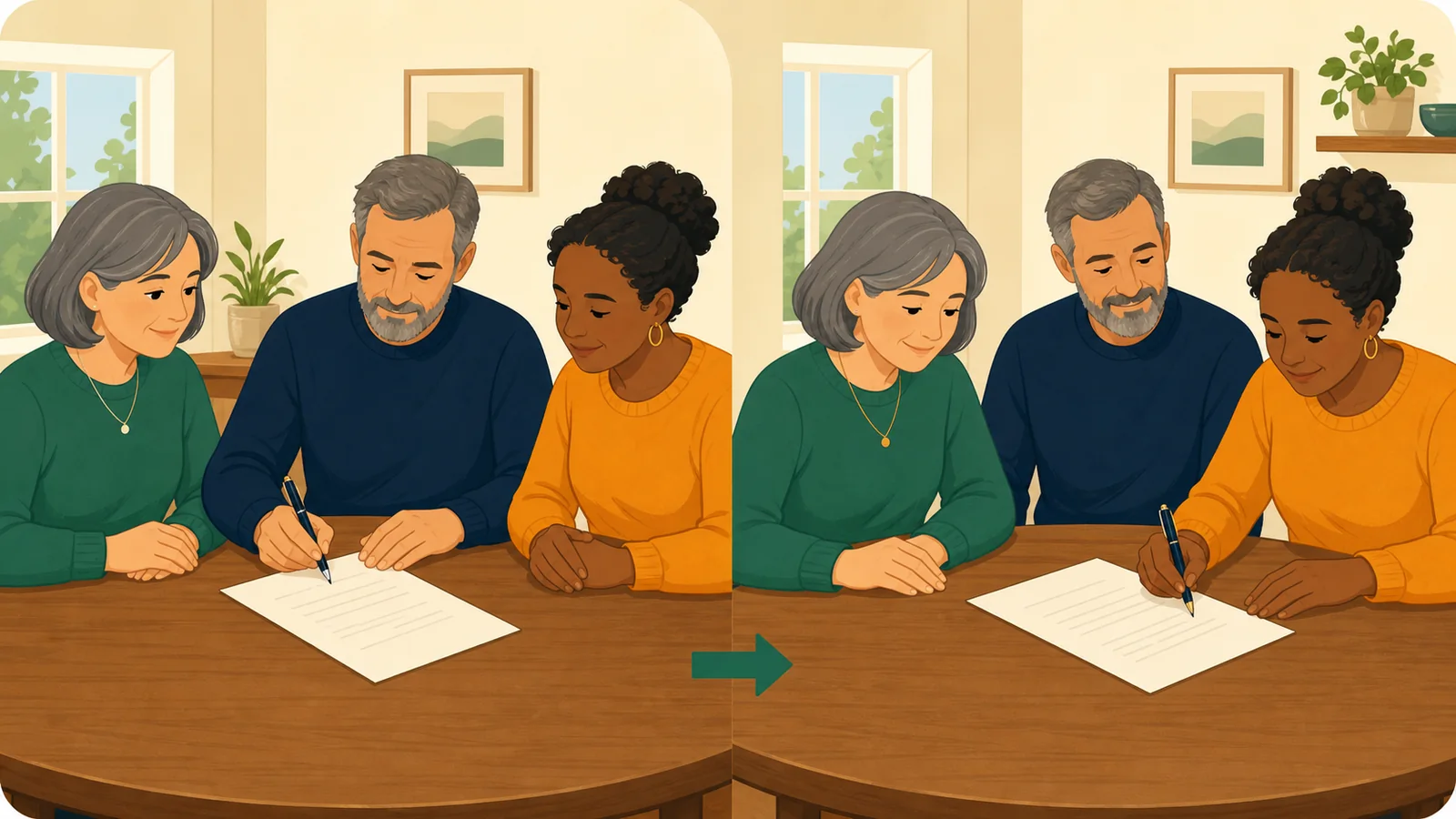
What are the legal basics?
- You are 18 or over
- You make the will voluntarily
- You understand the will and have the mental capacity to make it
- The will is in writing
- You use the correct signing and witnessing process
How should you sign the will?
- Sign the will in the presence of two witnesses aged 18 or over. Both witnesses must be present at the same time and have a clear view of you signing
- Each witness must sign the same document in your presence, where you can clearly see them sign. They do not have to sign at the same moment as each other
- Check every required signature and date before storing the document
Who should you choose as witnesses?
Choose witnesses who will not inherit under the will and are not married to, or in a civil partnership with, anyone who will inherit. If a beneficiary or their spouse or civil partner acts as a witness, the gift to them can fail even if the rest of the will remains valid.
How should you make a later change?
Do not write changes onto a signed will. To make a change, use a codicil with the same signing and witnessing process or make a new will. Keep the valid original safely and tell your executors where it is.
Questions about signing a will
Do both witnesses need to be present when I sign?
Yes. Both adult witnesses must be present at the same time and have a clear view of you signing the will.
Do the witnesses need to sign at the same time as each other?
No. Each witness must sign the same document in your presence, where you can clearly see them sign, but they do not have to sign at the same moment as each other.
Can I write a change onto a signed will?
Do not write changes onto the signed document. Use a properly signed codicil or make a new will.
Useful on the day
Want the signing steps in one place?
Use the one-page guide before anyone signs.